Stranded in Schiphol

Stranded in Schiphol

By Karolina Mroczek, Grade 12

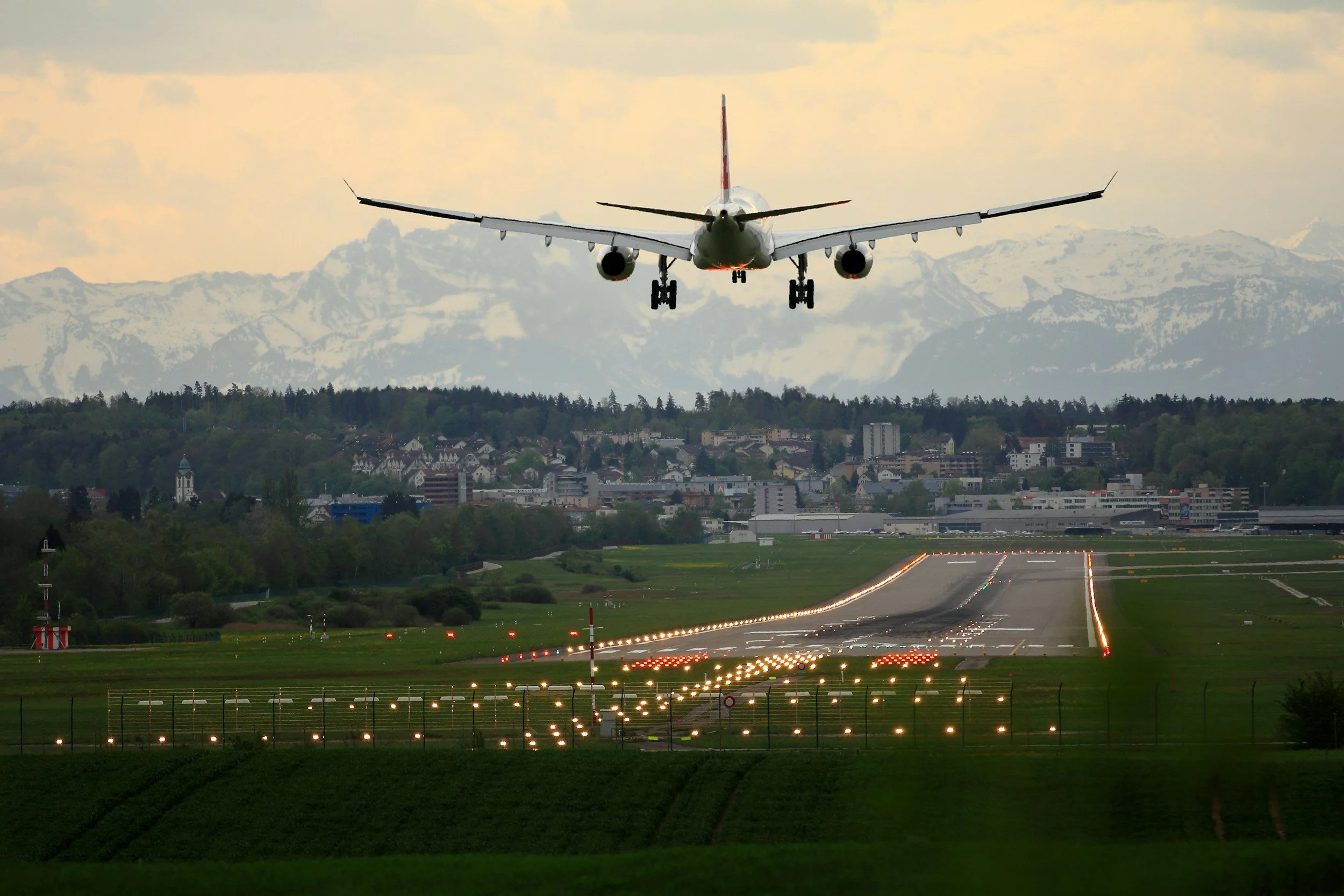
In the first week of January 2026, travelers in Amsterdam’s Schiphol Airport faced unimaginable chaos as excessive snow caused the cancellation of over 2,700 flights. The slowdown impacted much of Europe, but the Netherlands seem to have experienced the worst of winter’s snow. Schiphol is one of the major airports in Western Europe. It is the fourth busiest airport in the continent, having served approximately 70 million passengers in 2025. The coastal hub is known for its reliability, yet this year’s snow overpowered even one of the most efficient of airports.

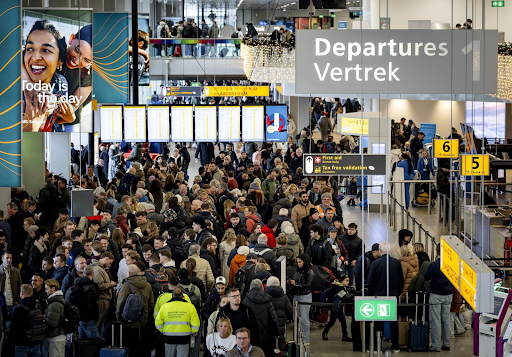
KLM, the Netherlands’ flag carrier, maintains a hub at Schiphol. Because it is the most flown airline within the airport, KLM has the responsibility to de-ice most of the planes. Although this typically is not an issue, the snowstorm overwhelmed airport staff. Schiphol nearly depleted its entire stock of de-icing fluid, which was sourced from Germany. The supplier was unable to confirm a timely delivery, forcing 25 of Schiphol’s de-icing trucks to ration the fluid. While 100 staff members worked to bring the planes to safe flying conditions, KLM canceled and delayed over 200 flights each day of the slowdown. During this time, thousands of passengers were practically “snowed in”: many slept at gates while hotels filled quickly with distraught visitors. Rebooking was hardly feasible as nearly every passenger was in the same situation. Service desks were crowded throughout the week, but few lucky individuals were able to board flights as early as the same day.

After over a week of snowy chaos, Schiphol began to recover. Most unclaimed luggage was sent to passengers’ final destinations or places of residence, with little potential for reimbursement. This year’s winter proved harsher than most, leading airports such as Schiphol to underestimate the impact the snow would have. Along with Schiphol’s recovery, Vienna International Airport and even Chicago’s O’Hare Airport have returned to standard operations. Ultimately, winter weather is detrimental to airport operations, and it is crucial for global hubs to be prepared for such circumstances.

https://www.paddleyourownkanoo.com/wp-content/uploads/2026/01/3DDMMMT-1600x1117.jpg



Artemis II

Artemis II

By Simon Benca, Grade 12

Artemis II, NASA’s First Flight Around the Moon in Over Fifty Years

On April 1, 2026, NASA launched a rocket beyond low Earth orbit and around the moon. Artemis II, a 10 day lunar flyby. From April 1 to April 11, four astronauts traveled farther from Earth than any before them.  Their distance of 252,760 miles surpassed the Apollo 13 record of 248,655 miles. This was also the first crewed flight beyond low earth orbit since Apollo 17 in 1972.

This flyby had a crew of four people: Reid Wiseman, Victor Glover, Christina Koch, and Jeremy Hansen. All four members made history on this flight: Wiseman became the oldest person to travel beyond low Earth orbit and around the moon. Glover became the first person of color to make this journey. Koch became the first woman to fly around the moon and travel beyond low Earth orbit. Canadian Space Agency astronaut Hansen became the first non-U.S. citizen to make this expedition.

Artemis II utilized a NASA Space Launch System rocket to leave low Earth orbit, breaking off from the main Orion spacecraft. After traveling to the “dark side" of the moon, they used the moon’s orbit as a sling shot to send the spacecraft back to Earth. On April 11, 2026, The Orion spacecraft hit the Earth’s atmosphere at around 25,000 miles per hour, dipping into the upper atmosphere to slow down. During this descent, the heat shield endured temperatures up to 5,000°F and the spacecraft splashed into the Pacific Ocean. The crew successfully made it to the moon and returned back to Earth

This successful mission will be a stepping stone for future expeditions. Artemis IV is set to be the first time a human has landed on the moon’s surface since 1972. In the world of space exploration and aerospace engineering, the future looks bright.

https://www.nasa.gov/image-detail/amf-art002e009006/

2026 FIFA World Cup to Kick Off in June

2026 FIFA World Cup to Kick Off in June

By Karolina Mroczek, Grade 12

Summertime is the ideal season for relaxation. The weather is hot and sunny, beaches and waterparks are full of visitors, and school is out of session. While most of the world is enjoying these seasonal traditions, Americans, Canadians, and Mexicans (along with their visitors) have the opportunity to revel in the excitement of the World Cup. The three nations are hosting the tournament, with the matches split evenly among them. Kickoff for the first match will take place in Mexico City on June 11. 

This year’s World Cup will be one to remember: the long-awaited tournament is returning on a scale larger than ever. Forty eight countries will be represented over the course of 104 matches, which will be held across 16 host cities. There are 12 groups consisting of four teams each. Notable teams include Qatar (previous host country, Group B) and Argentina (2022 champion, Group J). In addition, four teams are making their World Cup debut this year: Cape Verde, Curacao, Jordan, and Uzbekistan. 

The roughly one-month long tournament begins in just a few weeks. Tickets are still available for regional games in the New York and New Jersey area. Alternatively, a family road trip to a World Cup match in Boston or Philadelphia is another great way to spend the summer. Either way, supporting a team from the stadium–or the couch–will be extra special this year.


https://tmssl.akamaized.net//images/foto/newsansicht/fifa-world-cup-qualified-nations-1775031177-193712.jpg?lm=1775031183